Insulin resistance and the late-gestation sow

Gestation for the Modern Hyperprolific Sow
It is well understood that late gestation is a period of significant physiological shift for the sow, marked by increased metabolic demand. As she enters the final third of gestation, she is simultaneously supporting rapid fetal growth, mobilizing reserves in preparation for lactation, and building toward the intense physical demands of parturition. These pressures are not new — but they are more pronounced in the modern hyperprolific sow than they were even a decade ago. Improvements in genetic selection for prolificacy mean today’s sow is supporting larger litters with correspondingly higher nutrient demands, often with less physiological margin to draw on.
One of the consequences of this heightened demand is late-gestation insulin resistance, a metabolic adaptation that occurs as the sow’s body prioritizes glucose delivery to her developing fetuses. The phenomenon is analogous to gestational diabetes in women, where insulin sensitivity declines in the later stages of pregnancy (Yang et al., 2023). Although this is a normal physiological response, excessive metabolic dysfunction or an inability to compensate for increased nutrient demands can have negative consequences. This scenario has been associated with higher postnatal piglet mortality (Kemp et al., 1996) and can add to the challenges of farrowing, thus affecting both sow and piglet performance.
Late-Gestation Insulin Resistance: Physiology and Consequences
To understand why this occurs, it’s necessary to look at when the greatest pressures of gestation occur for the sow. The last trimester of pregnancy is marked by rapid fetal growth and development, placing significant pressure on the sow to support her offspring during this period (McPherson et al., 2004; Figure 1).
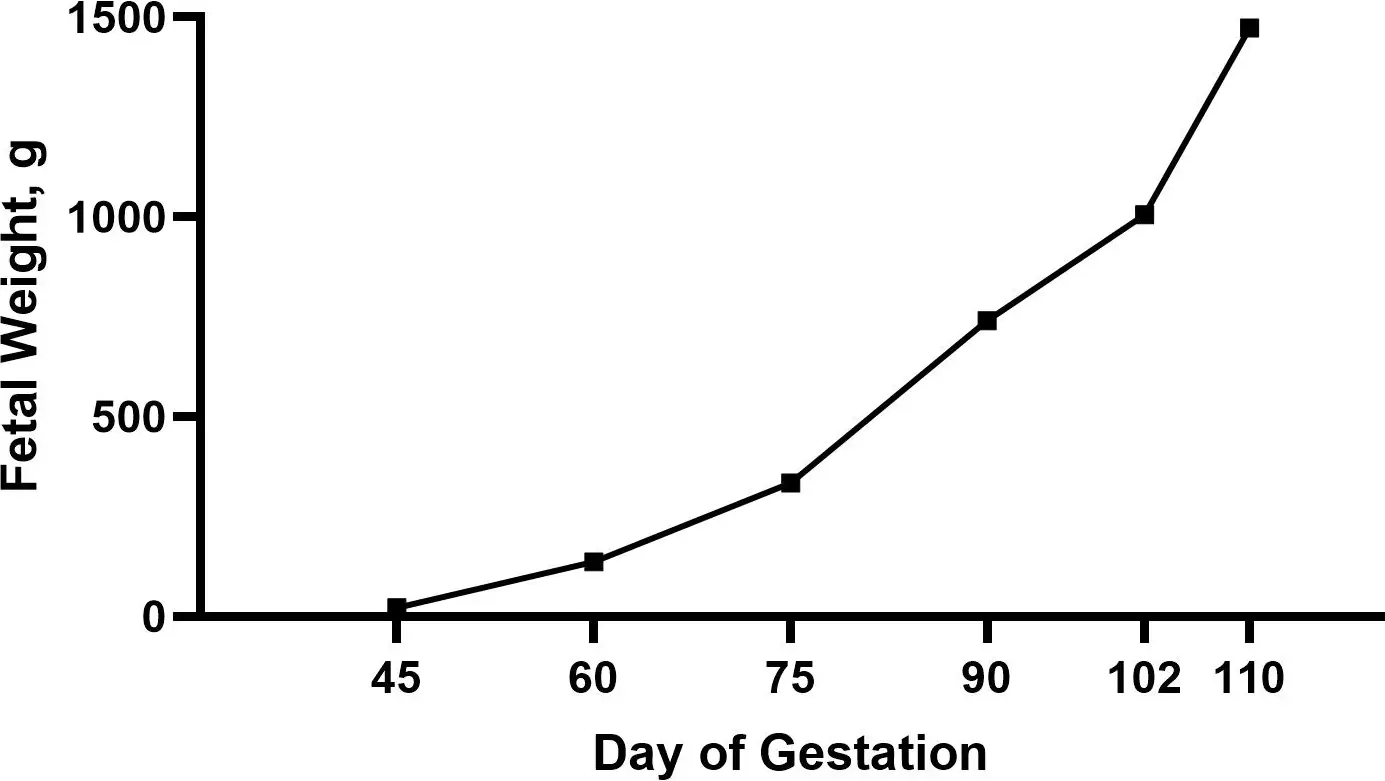
Figure 1. Fetal growth throughout gestation. Data from McPherson et al., 2004.
Like most major physiological processes in the body, that growth is fueled largely by glucose. To meet this rising demand without starving her own tissues, the sow’s body reduces the sensitivity of her peripheral tissues (e.g. skeletal muscle, adipose tissue) to insulin. This adaptation reduces maternal glucose utilization and helps maintain circulating glucose availability for the developing fetuses.
This is a natural phenomenon, in which a sow’s metabolism shifts to fully support her litter. While necessary for fetal development, it still comes with tradeoffs. As insulin resistance intensifies in late gestation, several downstream effects become more likely:
- Increased piglet mortality. Sows experiencing more pronounced insulin resistance are prone to higher rates of stillbirth and preweaning mortality, potentially linked to prolonged farrowing time and reduced piglet vigor at birth (Kemp et al., 1996).
- Inflammation in the sow. Insulin resistance in late gestation can be accompanied by systemic inflammation, which can further compound metabolic strain and has been associated with reduced feed intake around farrowing (Père and Etienne, 2007; Cheng et al., 2018).
- Extended farrowing time. Farrowing is an energy-intensive process that requires adequate glucose to support uterine contractions. As a sow reaches the final stages of gestation, glucogenic energy is sparse due to the demands of the uterus and mammary system both competing for glucose (Figure 2). As a result, the sow’s musculature involved in the farrowing process may face a restricted glucose supply and function suboptimally (Theil et al., 2022).
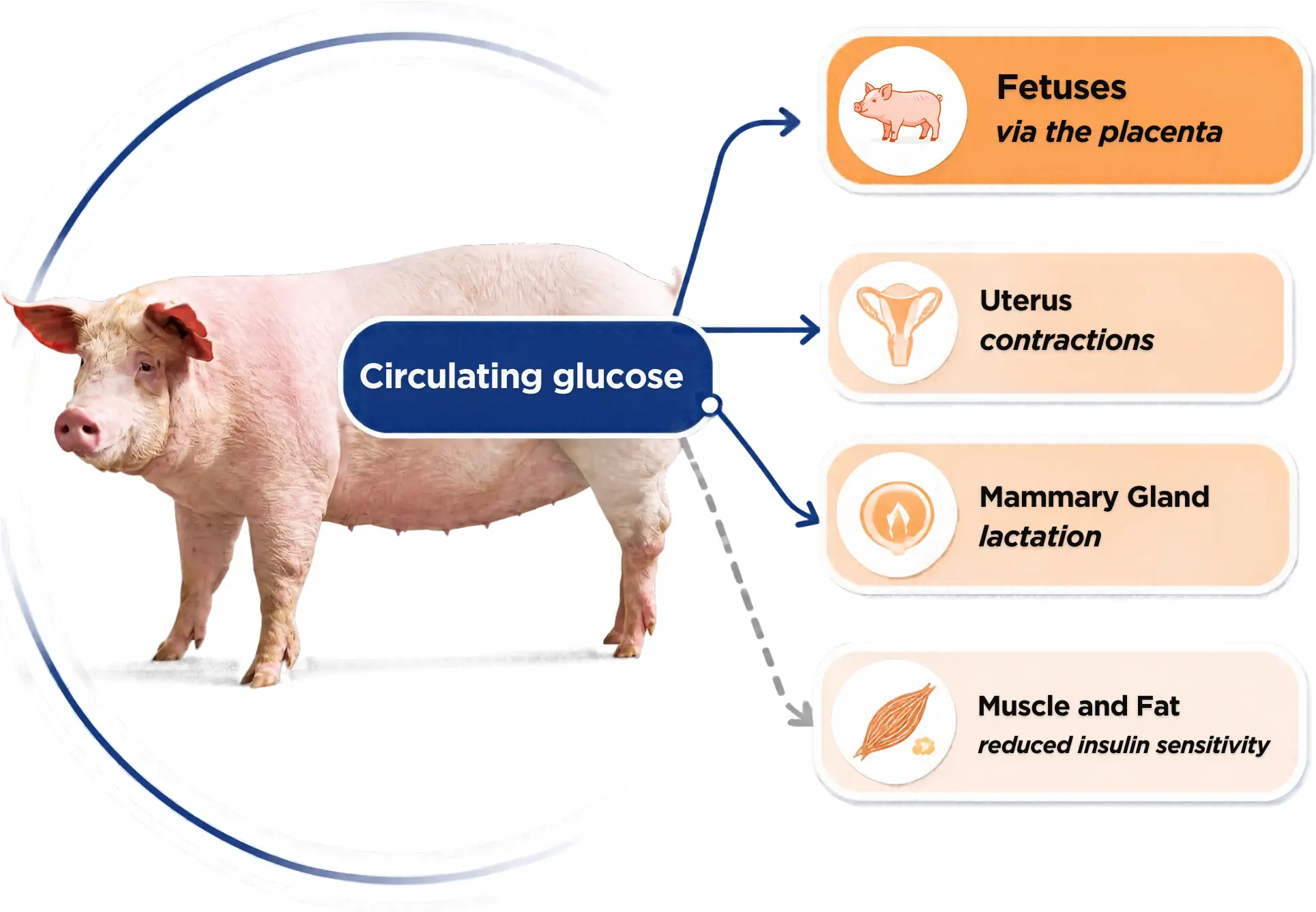
Figure 2. Glucose partitioning in the late-gestation sow. Reduced insulin sensitivity in peripheral tissues directs glucose preferentially toward the fetuses, which in effect can leave less available for the sow’s own tissues. Conceptual schematic based on Theil et al., 2022.
These effects don’t operate in isolation; they compound. A sow under greater metabolic and inflammatory load going into farrowing is less equipped to support efficient parturition, which can affect piglet outcomes downstream.
How Can We Address This?
Nutritional strategies that support maternal metabolic function and resilience can be especially valuable during late gestation. One such approach is through Prosea, a marine-derived multi-mineral complex combining a brown seaweed extract (Ascophyllum nodosum) with a natural source of calcium from calcified marine algae. Prosea’s potential benefits are multi-faceted; its components can support mineral balance and glucose metabolism, and help manage inflammation. The below points illustrate how Prosea can address various challenges in late-gestation:
Immune modulation and gut barrier function. Inflammatory cytokines such as TNF-α and IL-6 interfere with insulin signaling, so a higher inflammatory load tends to exacerbate insulin resistance (de Luca and Olefsky, 2008). Fucoidan and laminarin, the principal bioactive polysaccharides in Ascophyllum nodosum extracts, have been associated with lower expression of inflammatory cytokines in pigs. For example, in weaned pigs naturally infected with Salmonella, a fucoidan-rich extract lowered ileal expression of IL22 and TGFB1 (Venardou et al., 2022). When Prosea was evaluated in an ex vivo study using porcine ileal tissue challenged with Salmonella, supplementation lowered TNF-α expression and reduced gut permeability by 45% (Bouwhuis et al., 2025). Thus, Prosea may help to modulate localized inflammation and gut barrier function surrounding stressful periods for a sow.
Metabolic regulation. Glucose delivery to the fetus is a central driver of late-gestation insulin resistance, so supporting the sow’s metabolic resilience during this period of high energy demand is key. Piglets born to 3- and 4-parity sows fed Prosea showed lower umbilical cord expression of stearoyl-CoA desaturase (SCD) and higher expression of the glucose transporter SLC2A2, markers that may reflect greater energy metabolism at the placental interface (Cho et al., 2023).
Stress response. Cortisol rises around farrowing as a normal part of parturition, but added stress can push levels higher, and elevated cortisol can exacerbate inflammation and reduce insulin sensitivity (Sic et al., 2024). In a trial by Cho et al. (2023), sows supplemented with Prosea components had significantly lower salivary cortisol, epinephrine, and norepinephrine after farrowing across parities, with cortisol being approximately 28% lower on average compared to controls.
Sow and litter performance. Research by Upadhaya et al. (2023) showed that when fed the ingredients contained within Prosea, sows had more live-born and weaned piglets per litter and heavier piglet weaning weights than controls. Additionally, Prosea sows had a farrowing time that was approximately reduced by 25 minutes and on average +0.75 piglets born alive and +1.05 piglets weaned per sow.
Key Takeaways
- Late-gestation insulin resistance is a normal metabolic adaptation that redirects glucose toward the developing fetus, but it becomes a production concern when demand outpaces the sow’s capacity to compensate.
- Downstream effects can include extended farrowing duration, reduced piglet vigor at birth, increased piglet mortality, and inflammation in the sow.
- These effects compound; a sow under greater metabolic and inflammatory load entering farrowing is less equipped for an efficient parturition, which can carry through to piglet outcomes.
- Nutritional strategies in late gestation should aim to support the sow through this adaptation rather than attempt to eliminate it.
- Prosea offers a potential solution to address this through immune modulation, improved energy status, and stress reduction during this period, with observed improvements in both sow and piglet performance.
References
Bouwhuis, M. A., I. H. G. Nooijen, E. van de Steeg, and S. O’Connell. 2025. Enhanced porcine gut barrier functioning and reduced inflammation from a combination of seaweed bioactives. BMC Vet. Res. 21:389. doi:10.1186/s12917-025-04832-7.
Cheng, C., H. Wei, H. Yu, C. Xu, S. Jiang, and J. Peng. 2018. Metabolic Syndrome During Perinatal Period in Sows and the Link With Gut Microbiota and Metabolites. Front. Microbiol. 9:1989. doi:10.3389/fmicb.2018.01989.
Cho, S., S. D. Upadhaya, W. J. Seok, S. Mun, H. Lee, R. H. van der Veen, K. Han, and I. H. Kim. 2023. Marine-derived Ca-Mg complex influences lipid and glucose metabolism, serum metabolites, colostrum profile, and stress hormone in sows over four-parity periods. J. Anim. Sci. Technol. 65:1308–1322. doi:10.5187/jast.2023.e116.
Kemp, B., N. M. Soede, P. Vesseur, F. Helmond, J. Spoorenberg, and K. Frankena. 1996. Glucose tolerance of pregnant sows is related to postnatal pig mortality. J. Anim. Sci. 74:879. doi:10.2527/1996.744879x.
de Luca, C., and J. M. Olefsky. 2008. Inflammation and Insulin Resistance. FEBS Lett. 582:97–105. doi:10.1016/j.febslet.2007.11.057.
McPherson, R. L., F. Ji, G. Wu, J. R. Blanton Jr., and S. W. Kim. 2004. Growth and compositional changes of fetal tissues in pigs. J. Anim. Sci. 82:2534–2540. doi:10.2527/2004.8292534x.
Père, M.-C., and M. Etienne. 2007. Insulin sensitivity during pregnancy, lactation, and postweaning in primiparous gilts. J. Anim. Sci. 85:101–110. doi:10.2527/jas.2006-130.
Sic, A., K. Cvetkovic, E. Manchanda, and N. N. Knezevic. 2024. Neurobiological Implications of Chronic Stress and Metabolic Dysregulation in Inflammatory Bowel Diseases. Diseases. 12:220. doi:10.3390/diseases12090220.
Theil, P. K., C. Farmer, and T. Feyera. 2022. Review: Physiology and nutrition of late gestating and transition sows. J. Anim. Sci. 100:skac176. doi:10.1093/jas/skac176.
Upadhaya, S. D., W. J. Seok, S. S. Kumar, R. H. van der Veen, and I. H. Kim. 2023. Marine derived Ca-Mg complex supplementation basal diet during four subsequent parities improved longevity and performance of sows and their litters. J. Anim. Sci. Technol. 65:562–578. doi:10.5187/jast.2022.e121.
Venardou, B., J. V. O’Doherty, S. Maher, M. T. Ryan, V. Gath, R. Ravindran, C. Kiely, G. Rajauria, M. Garcia-Vaquero, and T. Sweeney. 2022. Potential of a fucoidan-rich Ascophyllum nodosum extract to reduce Salmonella shedding and improve gastrointestinal health in weaned pigs naturally infected with Salmonella. J. Anim. Sci. Biotechnol. 13:39. doi:10.1186/s40104-022-00685-4.
Yang, X., R. Hu, M. Shi, L. Wang, J. Yan, J. Gong, Q. Zhang, J. He, and S. Wu. 2023. Placental Malfunction, Fetal Survival and Development Caused by Sow Metabolic Disorder: The Impact of Maternal Oxidative Stress. Antioxidants (Basel). 12:360. doi:10.3390/antiox12020360.