Hindering hatchability: how oxidative stress affects broiler-breeder production
Industry Significance
Chicken is the most consumed animal protein in the United States, surpassing pork,
beef, and lamb. The U.S. alone contributes 20% of global production, with 21.34 million
metric tons of meat being produced in 2024 (USDA-FAS, 2025). Over the last decade years,
the poultry industry has made strides in boosting animal growth and efficiency. However,
this has come at the expense of other parameters such as fertility and hatchability. In 2013,
hatchability hovered around 83% but has since declined to approximately 79% as of early
2025. A recent study conducted by Texas A&M University validated these concerns and
predicted that if these declines continue, hatchability will be as low as 60% by 2050 (Figure
1; Cash et al., 2025).
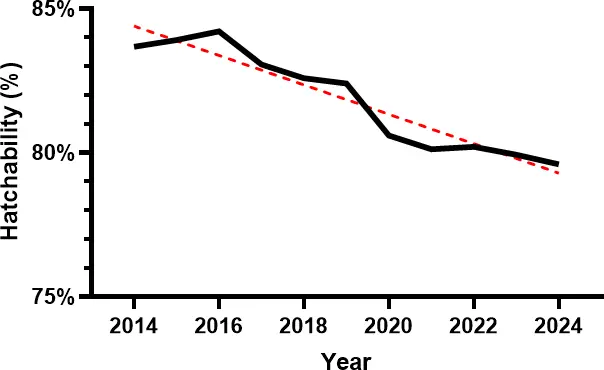
Figure 1. Decline in hatchability (%) over the last decade. Data obtained from USDA-NASS.
So, what are the driving forces for this decline over the last ten years? The answer is not one-size-fits-all, but the inherent stress of intensive production systems appears to play a role in issues related to fertility and hatchability. There are many opportunities for internal and external stressors throughout each stage of production (e.g. heat stress, stocking density, feed transitions, pathogens) that can disrupt normal physiological function. This pressure predisposes birds to oxidative stress, which can be detrimental to fertility, hatchability, and chick performance – all parameters that are central to the success of broiler-breeder production.
What is oxidative stress and how does it affect an embryo?
Oxidative stress simply defined is an accumulation of free radicals, or reactive oxygen species (ROS), that outweigh the antioxidant capacity of the body. While production of free radicals is a normal byproduct of energy metabolism, it becomes an issue when formation exceeds the capacity for cells to combat oxidative damage. When damage occurs at the cellular level, it leads to poor intestinal and reproductive health that presents as reduced feed efficiency, fertility, or lower meat quality. Avian embryos are particularly susceptible to oxidative stress due to the increased metabolic demand of rapid embryonic development over a relatively short period of time. Additionally, the egg yolk becomes a primary target for ROS due to its rich contents of polyunsaturated fatty acids (PUFAs). The double bonds in PUFAs are attacked by ROS, causing lipid peroxidation and the production of reactive aldehydes such as malondialdehyde (MDA), which is a specific biomarker for oxidative stress.
If an embryo can survive to the later stages of incubation, the cellular damage caused by oxidative stress has more than likely negatively impacted organ and bone development as well. Notably, mitochondrial dysfunction due to compromised cell walls (targeted by ROS) disrupts calcium metabolism and deposition, leading to weakened chicks and poor eggshell quality. Therefore, hatchability declines due to inability of chicks to either survive or successfully hatch. “Imagine you are a chick, and you are stuck inside a shell, and you have to break it open. That’s quite a lot of exertion” says Dr. Mike Bedford “And that’s where a lot of oxidative stress occurs because oxygen diffusion into the egg is often limited”.
Nutritional management strategies
There are several potential ways to mitigate the negative effects of oxidative stress, but maternal nutritional supplementation of antioxidants is among the most beneficial and practical. Vitamin E, which is commonly included in rations, acts as a bio essential vitamin and radical scavenger (i.e. electron donor) to effectively provide defense against oxidants and thereby reduce oxidative stress. Polyphenols follow a similar mode of action, however what makes them unique compared to vitamin E is the location relative to the cell that they are protecting. Vitamin E is a lipid-soluble antioxidant, meaning it associates with the phospholipids found in cell membranes. Therefore, it is effective in combating oxidative stress on the outer layer of a cell. On the flip side, polyphenols can be water-soluble, so they can be absorbed directly into cells and neutralize excess ROS from within, where most of the damage occurs.
Polyphenols also have the potential to act as more than just antioxidants, through the ability to recycle vitamin E by donating electrons to its oxidized form. Internal data has shown that with the addition of Elife®, a natural blend of bioavailable polyphenols, antioxidant status of the layer hen was improved as well as increasing vitamin E levels in the egg yolk by 53%. More interestingly, in light of the issues in hatchability, commercial supplementation has resulted in improved hatchability, with studies showing a 2 to 3 extra day-old chick per hen. Therefore, by providing the hen with an adequate supply of vitamins combined with polyphenols, it increases the antioxidant status of the egg, where they can be used as a defense for the growing embryo. Overall, this data suggests that increasing the antioxidant status in the parent bird may be an opportunity to improve hatchability and bird viability. A blend of polyphenols provides that opportunity through their functionality while also typically being a cost-effective solution for increasing antioxidant status.
References
Cash, C., K. Witherspoon, and G. Athrey. 2025. How concerned should we be about broiler breeder fertility declines? Poultry Science. 104:104992. doi:10.1016/j.psj.2025.104992.